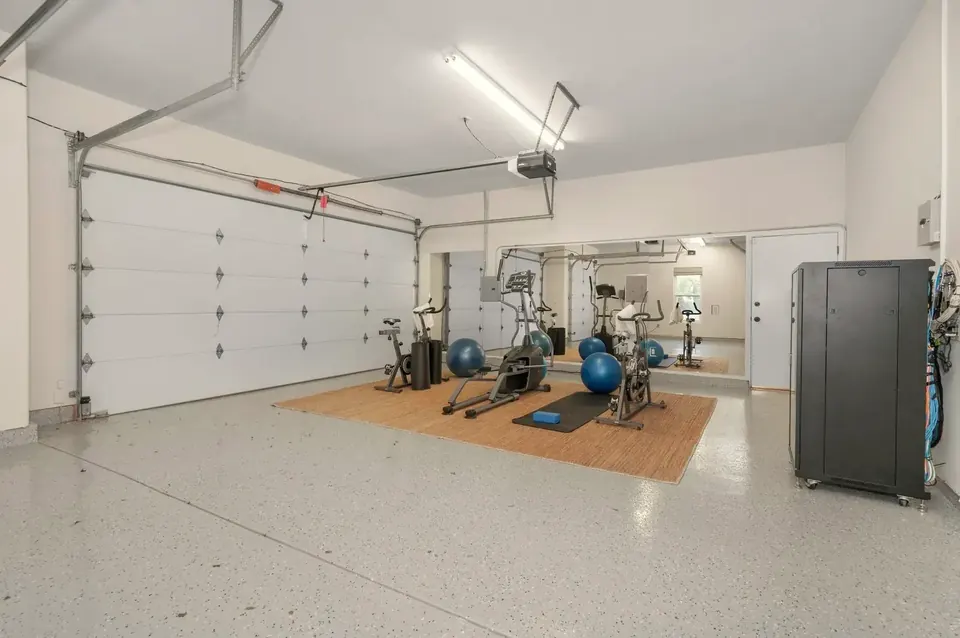
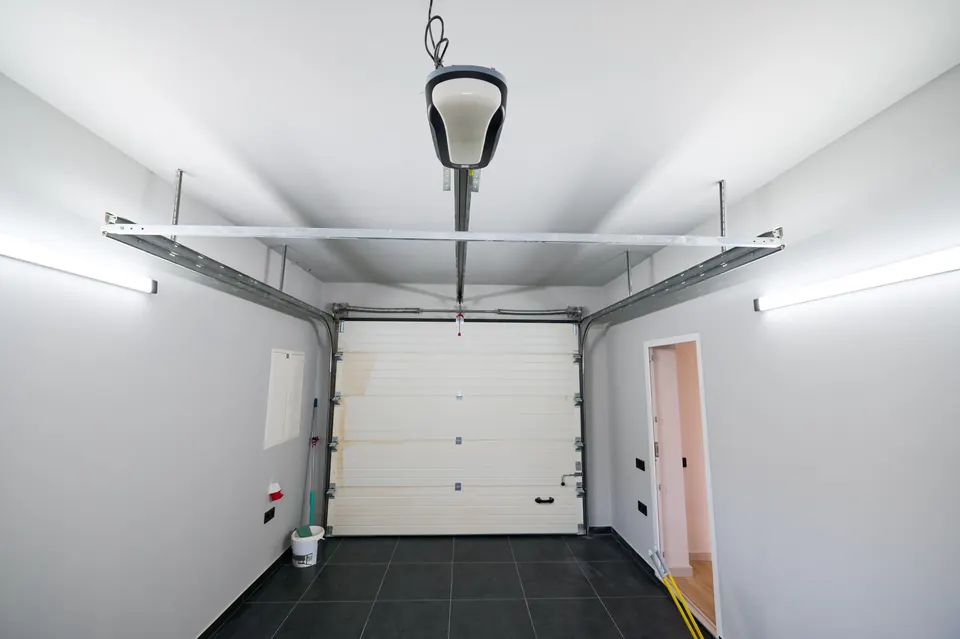
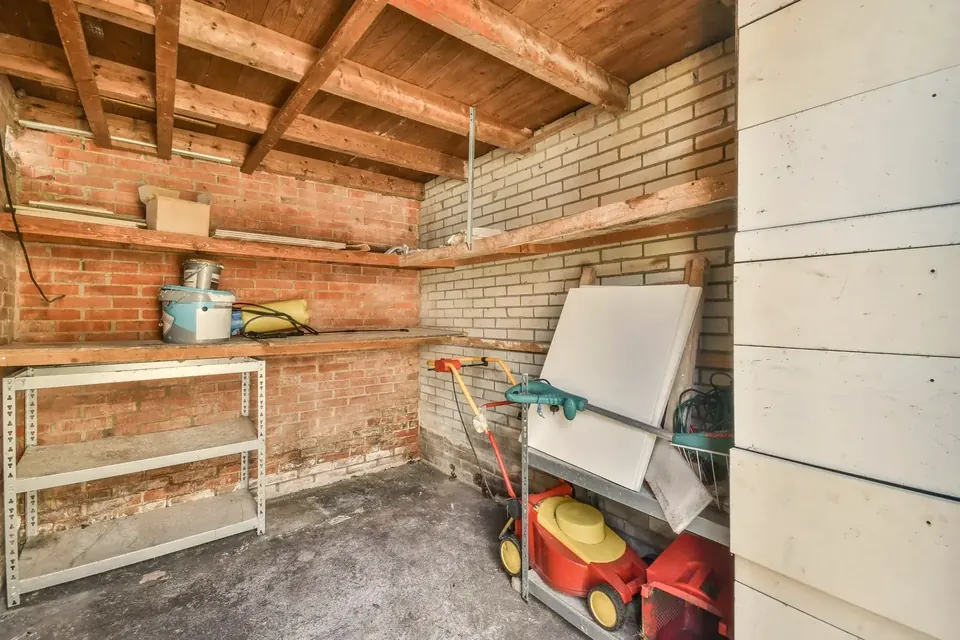
Garages here tend to be generous: three stalls are common, often with a deeper bay for a boat, a workbench or a second refrigerator. Many are insulated, and a good number are heated. Those details affect how we plan the work.
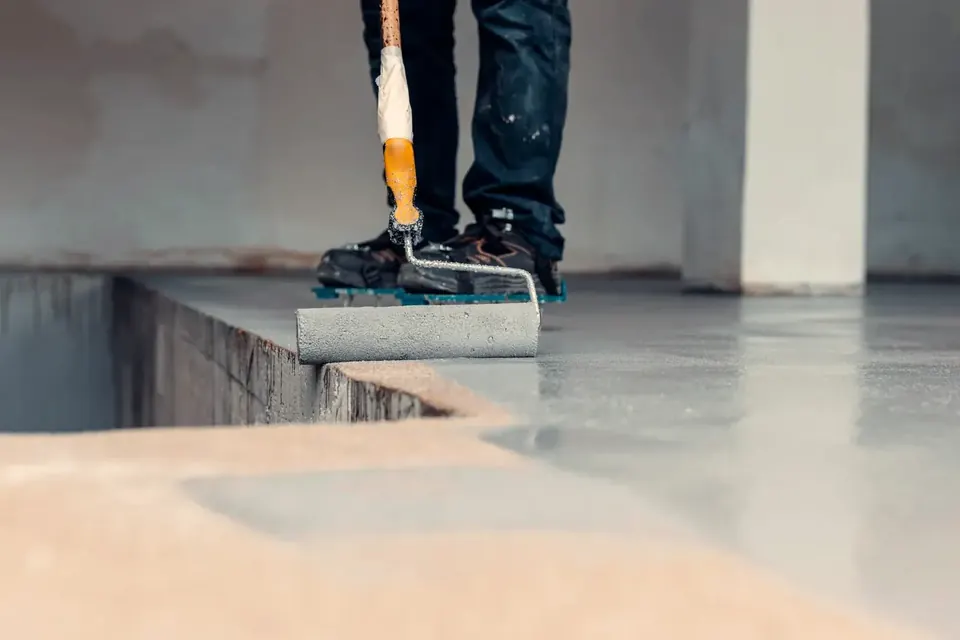
A heated garage can be coated at any time of year with any system. An unheated one is a candidate for standard epoxy from late spring to early fall, and for polyaspartic or polyurea the rest of the year. Either way, we measure the slab temperature on the day, because concrete lags well behind the air.
Homes built in the 1960s through the 1980s often have slabs without a vapor barrier beneath them. That does not rule out a coating, but it makes the moisture test more important. Newer construction is usually simpler, although very smooth, hard-troweled finishes need a more aggressive grind.
We also think about how the floor meets the driveway. The coating should stop under the closed door, at a clean, sealed line, so sunlight and plow slush at the threshold do not work on an exposed edge.