Greys and silvers
From pale pearl to deep graphite. Clean, architectural, and easy to pair with any wall color or furniture.
Request a quote
Four quick details are enough to start. We will follow up to arrange a visit.
Or call (262) 000-0000
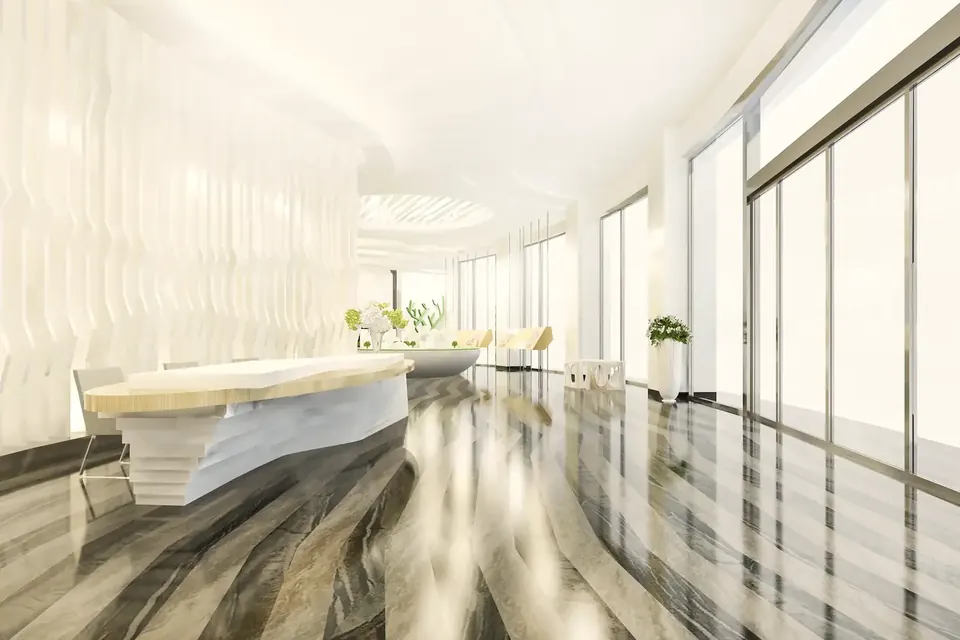
Metallic epoxy floors in Brookfield, WI
Shimmering pigment carried through clear resin, shaped by hand and frozen as it cures. It is the most expressive floor we make, and each one is made exactly once.

People often assume a metallic floor is painted or printed. It is neither. The pattern is created by physics while the floor is still liquid.
The system uses a clear epoxy with a small amount of pearlescent pigment stirred in. These pigments are tiny reflective platelets. Suspended in resin, they catch the light at different angles, which is what gives the floor its glow and its sense of depth.
When the resin is poured onto the floor, it starts to flow and level. Heavier concentrations of pigment sink and drift. Lighter areas spread thin. Where two colors meet, they feather into each other. The installer steers this with tools and timing, and then the cure locks everything where it is.
The finished floor has no repeating pattern and no hard edges. From one angle it may look like brushed metal. From another, like stone or smoke. It changes through the day as the light in the room changes.
It is worth being candid about this finish, because it is not for every room or every owner.
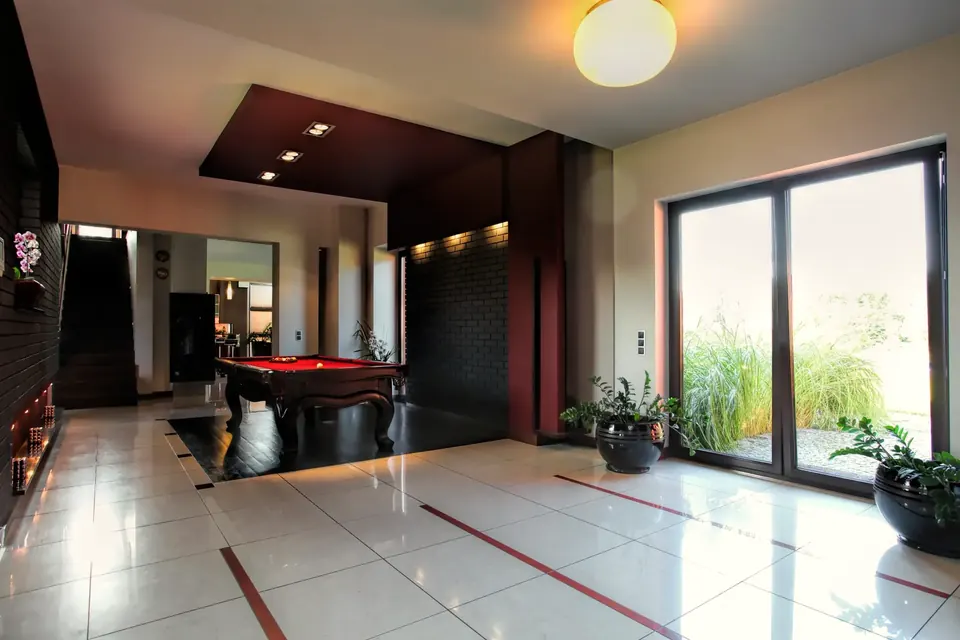
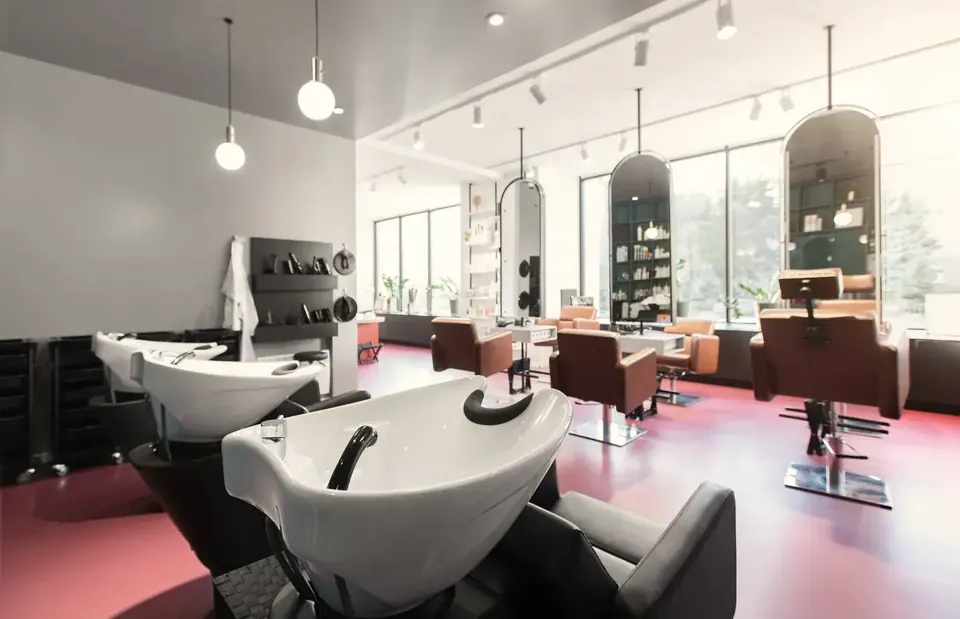
It suits you if the floor is meant to be noticed, the space is mostly used on foot, and you are comfortable keeping it reasonably clean. Lower-level lounges, home bars, wine rooms, media rooms, studios, salons, boutiques and reception areas are ideal.
It may not suit you if the room sees gritty shoes all day, heavy rolling loads, or vehicles coming in wet with salt. A smooth, glossy floor in those conditions will show wear sooner than you would like. A flake floor is the better tool for that job.
It takes some flexibility. You pick the colors and the overall character, and we show you samples. The fine detail cannot be dictated. Clients who enjoy that element of surprise love their floors. If you need a perfectly uniform result, a solid color is a safer choice.
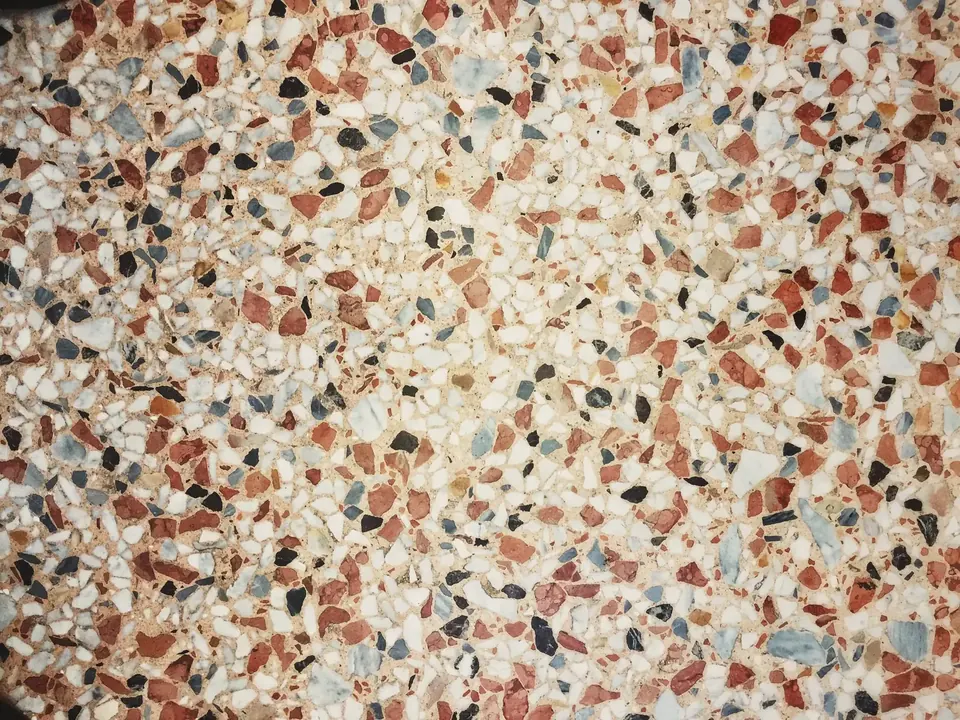
From pale pearl to deep graphite. Clean, architectural, and easy to pair with any wall color or furniture.
Coffee, copper, sand and amber. These bring warmth to lower levels that do not get much daylight.
Ocean and lagoon tones, often with a white or gold accent. Bold and relaxing at once.
A base color with one or two accents worked through it. This is where the marble and agate looks come from.
Colors blended with a roller for gentle, cloud-like variation. A quieter effect that suits large open floors.
Strong veins, cells and lacing produced with directional tools and a solvent mist. Best in smaller rooms or as a feature zone.
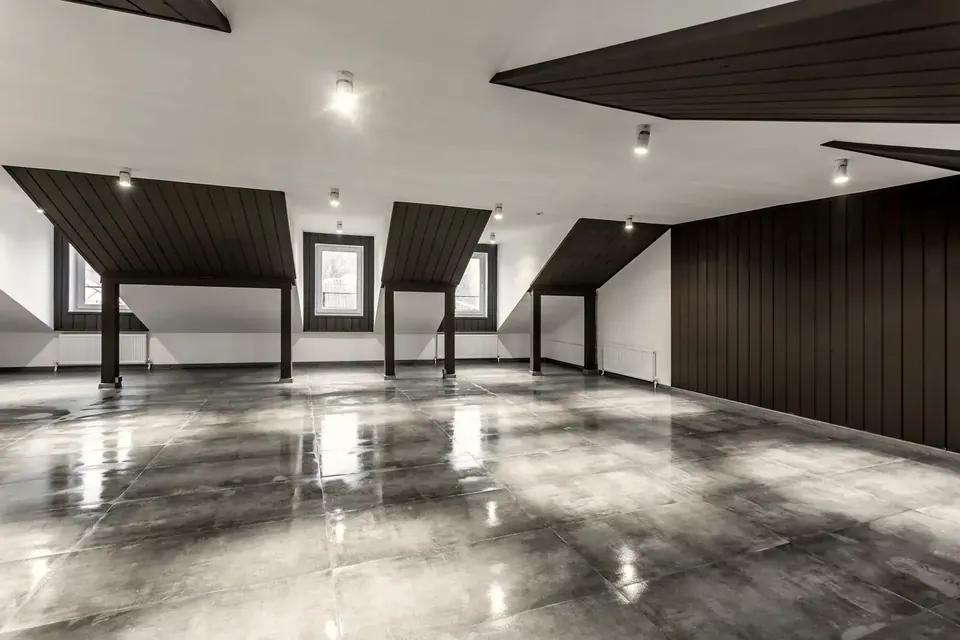
The final clear coat has as much influence on the floor as the color does.
A high-gloss finish is the classic metallic look. It is glassy and reflective and makes the pigment appear deepest. It also shows dust, footprints and fine scratches readily, in the same way a piano-black surface does.
A satin finish takes the mirror edge off. The pattern is still clearly visible, and the floor is much more forgiving day to day. For busy households and commercial spaces we recommend it more often than not.
Traction is the third consideration. Smooth resin is slippery when wet. A fine, transparent additive in the topcoat adds grip with very little change in appearance. We suggest it near sinks, bars and exterior doors.
All of our metallic floors are sealed with a urethane or polyaspartic wear coat. It is harder than the epoxy beneath and resists the yellowing that sunlight can cause in bare epoxy.
Color choices are narrowed down with boards made from the actual products.
Grinding, crack filling and patching until the surface is smooth. A thin, glossy floor telegraphs every dip.
A solid-color primer blocks air from escaping the concrete and sets the background tone.
Metallic resin is mixed, poured and manipulated across the entire room in one unbroken session.
Once cured, the floor is abraded lightly and coated with a clear protective finish in the sheen you chose.
Light foot traffic after a day or two, furniture after about three, with felt pads.
A metallic floor offers no place to hide. The surface is smooth, glossy and lit from above, so the eye finds every defect.
Bubbles and pinholes come from air leaving the slab as the resin warms. A proper primer prevents them. Color bands come from batches mixed in different proportions. Careful measuring prevents those. Lap lines come from resin that began to set before the adjoining section was poured. Enough people, working in a planned sequence, prevent those. Dust nibs and insects come from an uncontrolled room. Closing the space and managing airflow prevents those.
Each of these is avoidable, and each takes discipline. Because the only real repair for a flawed metallic floor is to sand it and pour again, the preparation and planning are where the quality is decided.
Photos do not do metallics justice. The samples move in the light, and you will know quickly which direction you prefer.
Most metallic floors we discuss in Brookfield are for finished lower levels. That means two things need attention before any design talk.
Moisture comes first. Basement slabs here are in contact with slow-draining clay soil, and spring brings the highest readings. Clear, glossy resin does not tolerate vapor pressure from below. We test, and where the numbers call for it we install a moisture-mitigating primer under the system. If the slab is too wet, we will advise against a metallic in that room.
The second is the route into the room. If the lower level connects directly to the garage or to a walk-out door, winter grit will arrive on shoes. A mat at each entry and a satin wear coat keep the floor looking fresh much longer.
Winter happens to be a good season for this work. With the furnace running, the slab is warm and the indoor air is dry, which gives a steady, predictable cure.
Dust with a dry microfiber mop. Wash with a damp mop and a neutral cleaner, then go over it with clean water so no film is left. Keep felt pads on furniture and replace them when they flatten.
Avoid abrasive pads, powdered cleansers and steam mops. After some years, if the surface loses clarity in walkways, a light sanding and a new clear coat brings back the finish.
Light is half of the effect, so it is worth thinking about before you choose colors. Recessed downlights create bright highlights and strong reflections on a gloss finish. Indirect lighting and daylight from windows produce softer, more even movement. Warm bulbs deepen bronze and amber tones, while cool bulbs sharpen greys and blues. If you are remodeling the room, settle the lighting plan first, then view samples under it.
What Brookfield clients ask when they are weighing this finish.
It will share the colors and the general style. The exact pattern will be its own. We use photos and samples to agree on direction, not to promise a copy.
The structure is high-build epoxy with a hard wear coat, so it is strong. The difference is visual. On a smooth, glossy surface, scratches show more than they do on a textured flake floor.
It can, and it looks spectacular. We suggest it for garages that are kept clean and dry, such as a collector's space. For daily winter parking, flake is a wiser choice.
Yes, with a traction additive. It is waterproof and has no grout lines to clean.
Usually three to five days, including cure time between coats. The room needs to stay closed and undisturbed for that period.
Light scratches in the wear coat can often be buffed or recoated. Deep damage to the color layer is harder to blend because of the unique pattern, which is one more reason for a good protective topcoat.
Yes. There are more coats, more material and considerably more skilled labor. Most clients choose it for one feature room and use flake or solid color elsewhere.
Keep exploring
Request a quote
Describe the room and the mood you are after. We will bring samples, talk through color and sheen, and check whether the slab is a suitable base.
Rather talk it through? (262) 000-0000