Clear coat on garage flake floors
The finish that seals the chips and takes the abuse from tires, salt and foot traffic.
Request a quote
Four quick details are enough to start. We will follow up to arrange a visit.
Or call (262) 000-0000
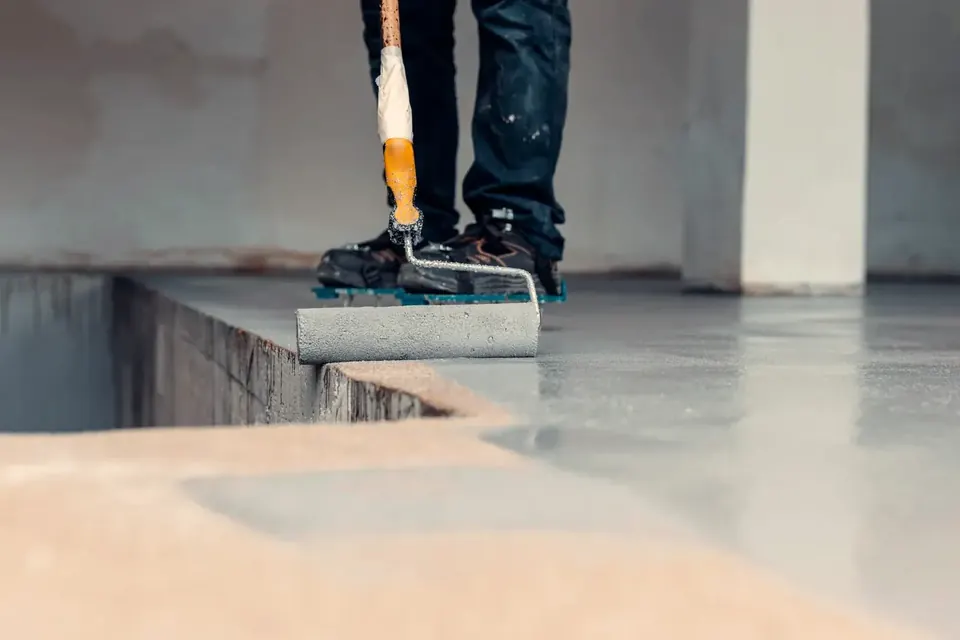
Polyaspartic floor coatings in Brookfield, WI
It hardens in hours, shrugs off sunlight and cures on a cold slab. Polyaspartic is the finish layer on most of the garage floors we install, and here is why.
Polyaspartic resin began as an industrial protective coating. It was formulated for steel structures that sit outdoors, where a finish has to cure quickly, resist corrosion and survive years of sun without breaking down.
Floor installers noticed that those properties solved long-standing problems with epoxy. Epoxy is a wonderful material, but it is slow, it yellows in ultraviolet light and it stops curing when the concrete gets cold. Polyaspartic does none of those things.
Chemically, it is a close relative of polyurea, adjusted so that it stays workable for several minutes instead of several seconds. That window is long enough to roll it across a floor and short enough that a second coat can follow the same day.
Today it is used mainly as the clear protective layer over flake, quartz and color coats, and sometimes as a complete system on its own.
We install both resins. They are complementary, and it helps to know the strengths of each.
Polyaspartic strengths
Epoxy strengths
A well-designed floor uses each one where it belongs. Often that means an epoxy or polyurea base against the concrete and polyaspartic on top, facing the traffic and the sun.
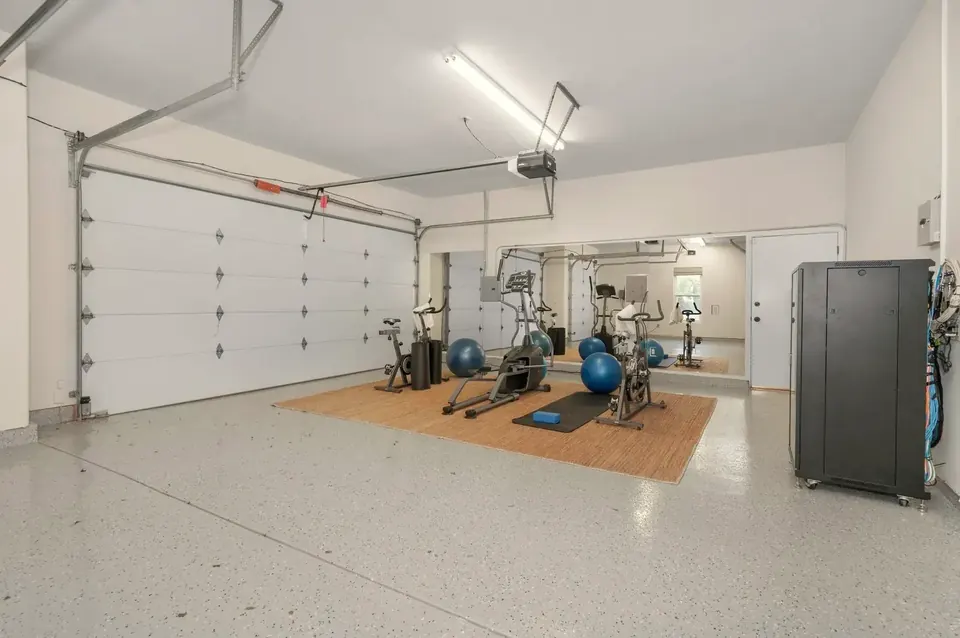
The finish that seals the chips and takes the abuse from tires, salt and foot traffic.
Paired with a fast-setting base so preparation, color and clear coat are completed in a single visit.
The topcoat on coated patios, porches and stoops, where epoxy would yellow. See outdoor concrete coatings.
Added scratch resistance and color stability for decorative floors.
For shops, restaurants and service areas that can only close between one business day and the next.
When a garage or unheated building needs coating and the slab is well below what epoxy will tolerate.
Not every floor needs to be done quickly. For some, though, time is the whole question.
A family with three cars and a narrow driveway cannot comfortably park on the street for a week in January. A homeowner listing a house wants the garage finished before the photographer comes. A shop owner loses revenue every day a bay is closed. A property manager has a tenant moving in on the first.
In each of these cases, a polyaspartic system turns a multi-day interruption into one or two days. The floor is typically ready for foot traffic that evening and for vehicles within a day or two.
Speed is not the only reason to choose it. If your garage door faces south or west and stands open in summer, the first several feet of floor get direct sun. An epoxy topcoat there would slowly turn amber. Polyaspartic will not.
Equipment is unloaded, the garage is masked and the slab temperature and moisture are checked once more.
The surface is ground and edges are hand-finished. Dust is captured at the tool.
Cracks and pits are filled with a rapid-cure compound and smoothed.
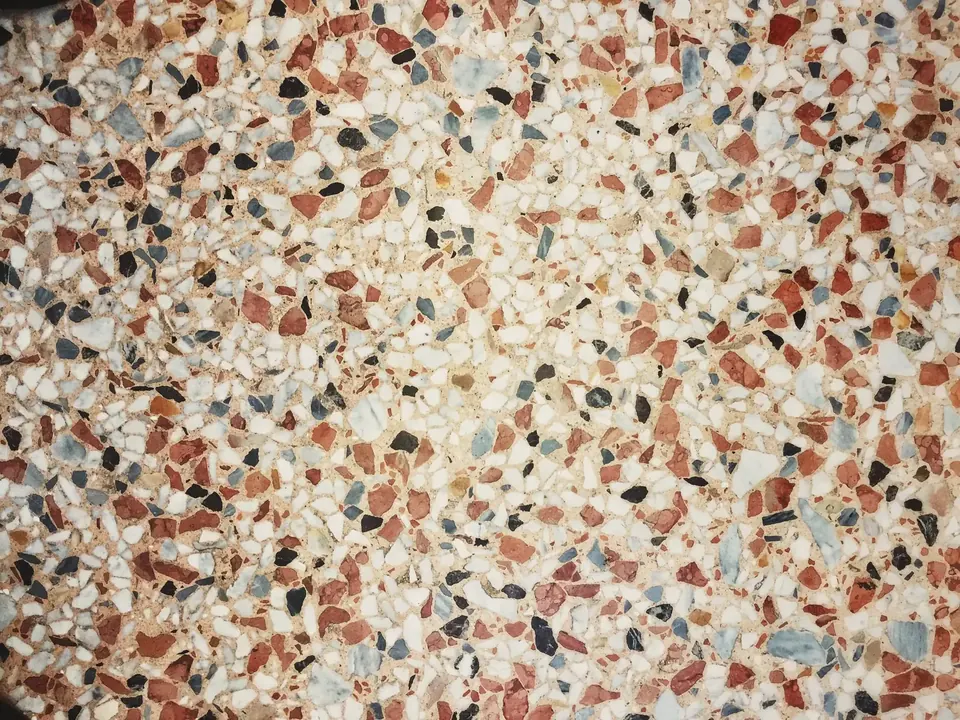
A fast-setting base coat goes down and decorative flake is cast into it.
After a short cure, the flake is scraped flat and the excess vacuumed up.
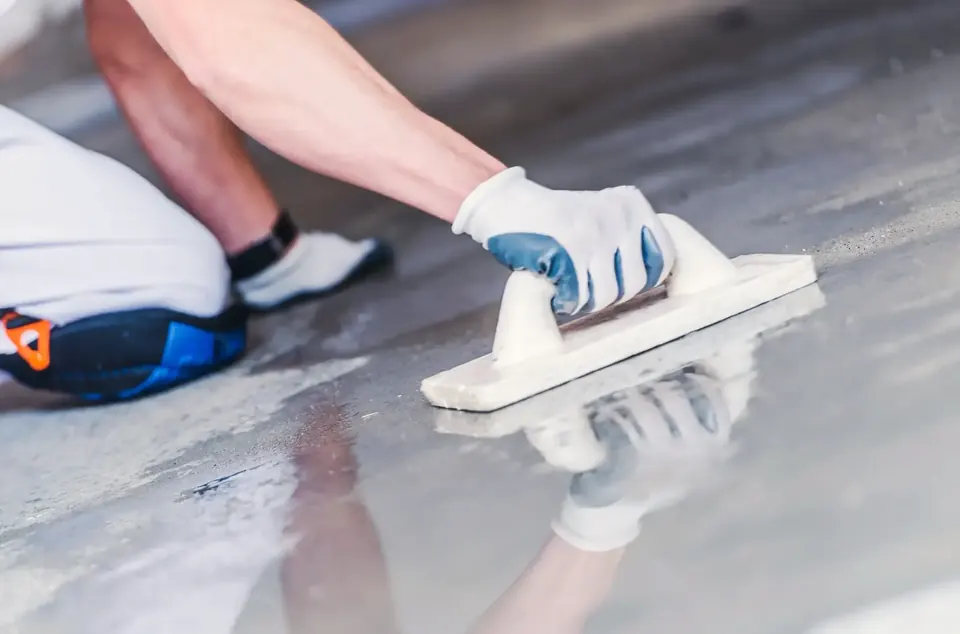
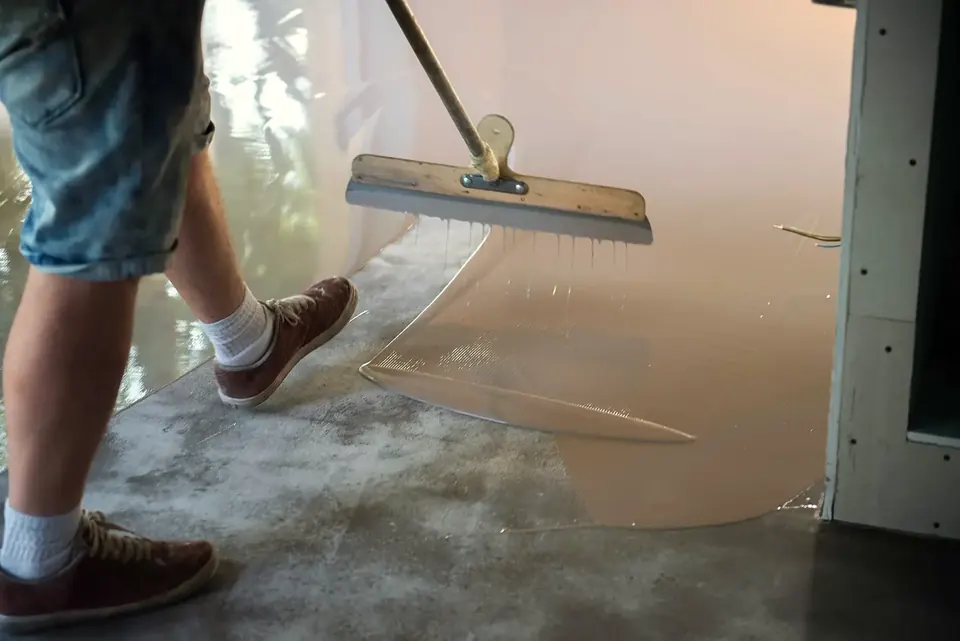
The clear coat is poured in ribbons, spread with a squeegee and back-rolled for an even finish.
The same quality that makes polyaspartic valuable makes it demanding. Once the two parts are combined, the clock starts. On a warm, humid day there may be less than twenty minutes before the material begins to thicken.
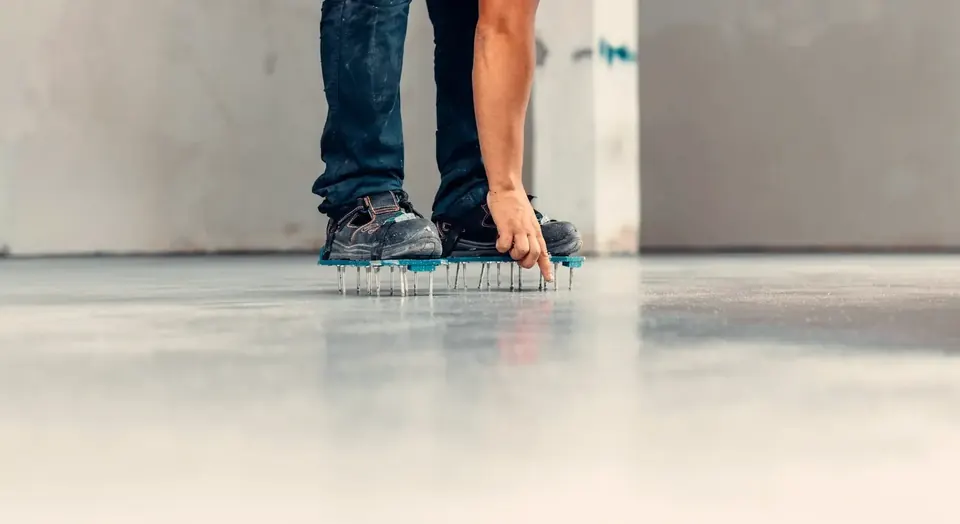
That calls for a rehearsed approach. We work out the sequence before the first bucket is mixed: where to start, how big each batch should be, who spreads and who rolls, and where the last person exits. Spiked shoes let us move across wet resin. Edges are cut in just ahead of the main application so everything stays wet together.
Humidity and temperature are checked because they change the cure speed. So is dew point, because moisture condensing on a cold slab will ruin adhesion.
And preparation is exactly as thorough as it would be for a slower system. A quick cure on top of poorly prepared concrete only means the floor fails sooner.
Tell us your dates. We will let you know what is realistic.
Our climate gives standard epoxy a fairly short outdoor season. In an unheated garage, the slab is warm enough from roughly late May through September. Outside that window, the cure slows down and the risk of a soft or cloudy finish goes up.
Polyaspartic removes that limit. We can coat a garage on a dry day in November or March, well before or after the warm months, and have it back in service quickly. For homeowners who decide in the fall that they want the floor protected before the salt trucks start, that is the difference between doing it now and living with one more winter of damage.
It also helps in summer. Because the system is finished in a day, there is less exposure to the pop-up storms and humidity swings that can interfere with slower coatings.
One caution. Polyaspartic applied straight to concrete is not the best answer for a damp slab. If our readings are high, we use a moisture-tolerant epoxy primer underneath. It adds a day and it protects the investment.
A polyaspartic finish needs nothing special. Sweep, mop with a neutral cleaner, and rinse. In the garage, clear standing meltwater with a squeegee. The surface resists staining, so most spills wipe up with a rag even after they have sat for a while.
A one-day floor moves quickly, so a little preparation on your side keeps it on track.
Clear the floor completely the evening before. Anything left on the slab slows the crew and shortens the working day. Plan where the cars will go for a night or two. If the garage has a refrigerator or freezer, decide whether it can be unplugged briefly or moved onto a finished section later.
Let us know about sprinklers, exterior outlets on a timer or anything else that might put water on the slab. Keep pets and children away from the garage until the next morning. And expect a noticeable resin smell for the first evening, which is normal and fades as the coating hardens.
The questions we hear most about fast-cure floors.
When they are prepared properly, yes. Durability comes from the bond to the concrete and the quality of the topcoat, not from how long the installation took.
Almost always because of shortcuts in preparation, such as skipping the grinder or ignoring moisture. The resin is rarely the cause.
Many formulations cure below freezing. The slab must be dry and free of frost, and we check the dew point. Very cold conditions extend cure times.
There is a noticeable odor while it is being applied. It dissipates quickly, usually by the following day in a ventilated garage. For enclosed interiors we use low-odor versions.
It is available in gloss and satin. Over flake, gloss is the usual choice because it brings out the color. Satin is popular indoors.
Over a flake broadcast it has good natural grip. On smooth floors we add a traction aggregate to the final coat.
If the existing coating is firmly bonded, it can be sanded and topcoated to refresh it. If the old floor is peeling, it needs to come off first.
Keep exploring
Request a quote
Share your timeline and the size of the space. We will tell you honestly whether a fast-cure system is right for the slab and when we could have it done.
Rather talk it through? (262) 000-0000